
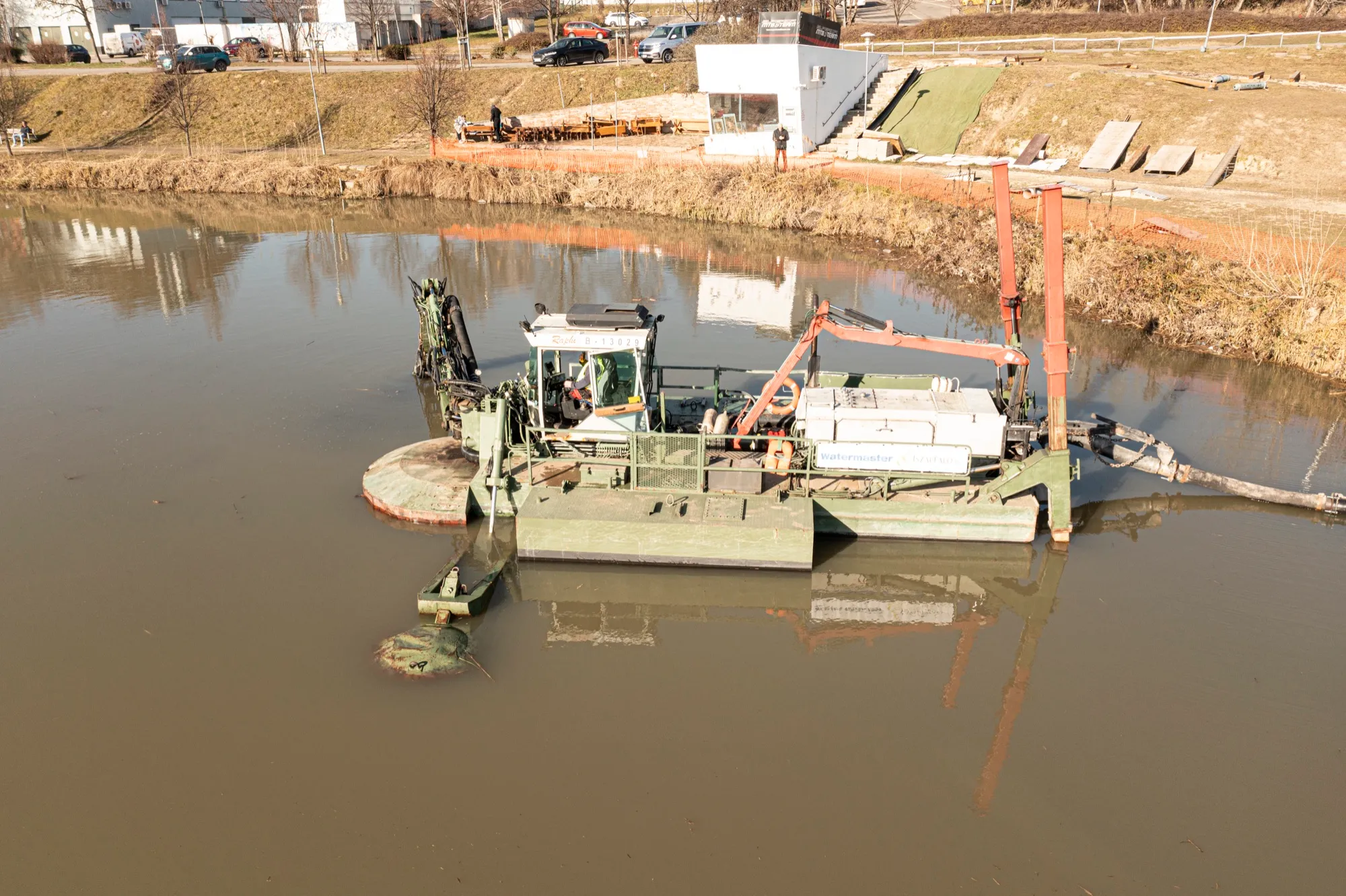
Dredging fitted to the project.
Whether a remote-controlled automatic dredger or a high-capacity hydraulic machine — from our broad equipment pool we pick the method that fits the site, the sludge and the way the plant operates. SRS Crisafulli, Truxor, Watermaster, submersible pumps and conventional dredgers — all under one contract.
The problem
Every lake, every settler and every lagoon has a different profile: depth, access, the character of the sludge, what the plant can tolerate. No single machine covers it all. One site needs a precise, gentle automated intervention that leaves the fish stock undisturbed; another needs heavy hydromechanical dredging that moves hundreds of m³ per hour; a risky industrial environment needs remote control because nobody can go in. The client needs a partner who brings the right machine — not the one that happens to be in the yard.
Our approach
We work with a broad dredging fleet, from precise automated units (SRS Crisafulli, Truxor) to high-capacity hydraulic dredgers (Watermaster, Berky, submersible pumps). After a site survey we choose the configuration that matches the sludge, the depth, the access and the pace required. Extracted material goes straight into a dewatering tube (Service II) — water returns to the basin and only drying sludge remains on the bank, ready for haulage.
Our toolkit
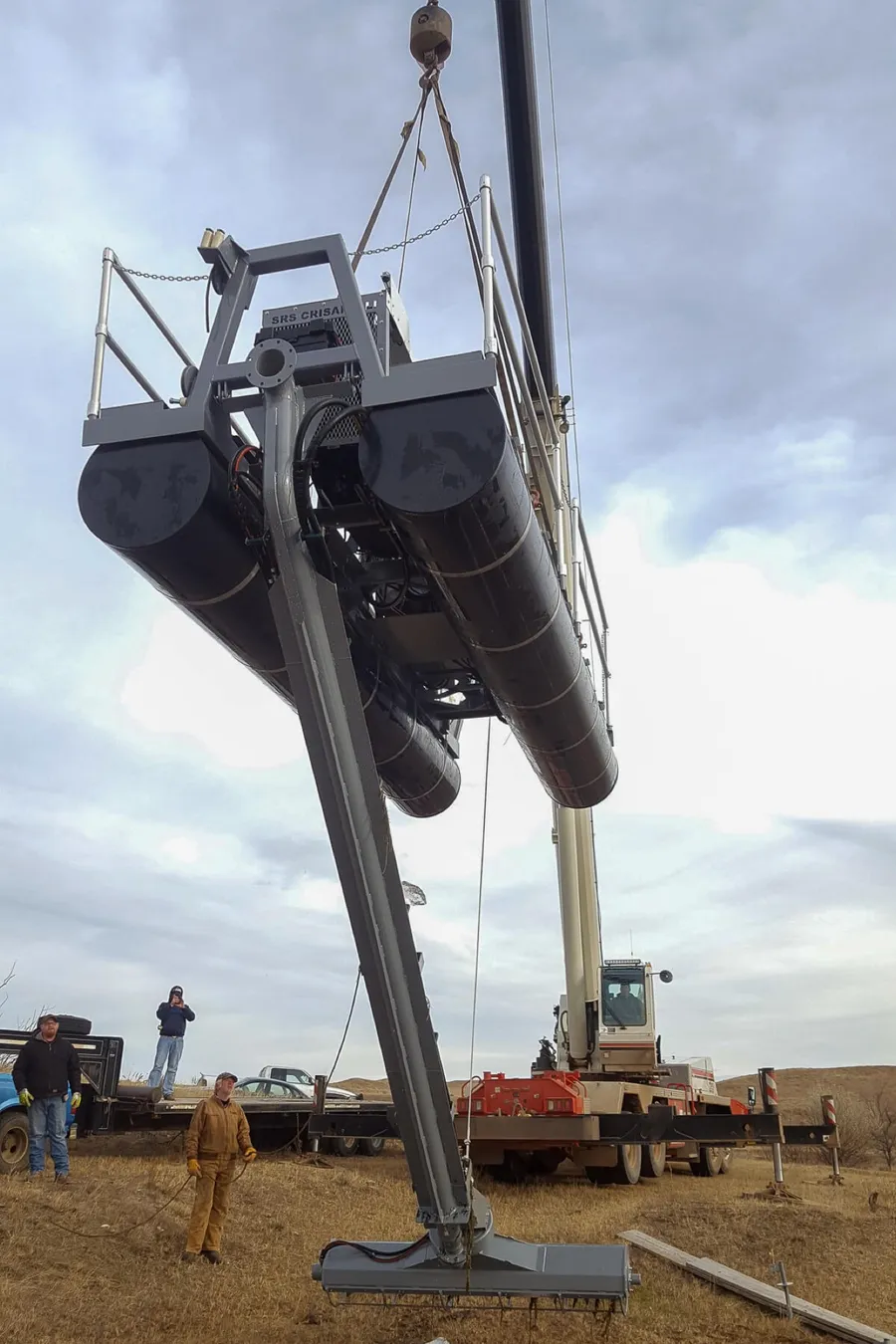
SRS Crisafulli — automated dredging system
A programmable, remote-controlled floating unit for precise, repeatable cycles in settlers and cooling reservoirs. The operator stays on the bank.
Truxor — amphibious multipurpose machine
Works in water and in mud, reaches places where a big dredger cannot. Suited to lakes and farm lagoons, reed cutting, biological dosing and suction-head work.
Watermaster — hydromechanical dredging up to 450 m³/h
A self-propelled floating dredger for high volumes — river desilting, canals, harbours, industrial basins. Working depth up to 6 m.
Submersible sludge pumps
For thin layers over large areas, or sealed industrial vats where a dredger does not fit. Long pumping range (100–500 m) into a bank-side tube.
Conventional mechanical dredging
Where the sludge character (stones, inorganic deposits) calls for tracked or long-reach excavators from the bank. Delivered with vetted construction partners.
Combined with dewatering
Extracted sludge goes straight into a geotextile tube — one contract, one accountable party, no needless haulage.
Typical clients
- Chemical, petrochemical and power-station sites (settlers, cooling reservoirs, ash basins)
- Municipal and industrial wastewater treatment plants — every section, including the hard-to-reach
- Metal processing, pulp and paper industry
- Municipalities — desilting urban lakes, fish ponds and park basins
- Agricultural operations — manure stores, lagoons, irrigation basins
- Construction firms — river, canal and harbour dredging
- Mining and quarry tailings ponds
Let’s talk about your specific project.
You will hear back within one working day. Email only — no phone follow-up.